The “golden era” of blogging
I got talking with a couple of close friends recently about the “good old days” of blogging; the “golden era”, as Mitch called it—even though he wasn’t necessarily blogging during whatever era he may have been referring to—although I am hesitant to give it any kind of label. It’s a time that feels a little bit specific to the blogging community I was in, and isn’t as cut-and-dry as, say, the “golden era” of what used to be Twitter. I pay my respects… 👀
Referring to a time as the golden era feels inaccurate to me because I don’t feel like I have the right to name a period of time based on my experience with a relatively small community of people. I haven’t named a time period just yet, but for the sake of setting a scene, let me put that aside for now. Perhaps some of my friends who were around in such an era would argue that me having literally dozens of comments on my blog and seeing popular resource sites get upwards of 200 comments per post is evidence of a community existing. A community that had real, actual people in it. And maybe the community was larger than I remember. I think about The Fanlistings Network, and how there were thousands of fanlistings listed at the network. Even if one person owned over 20 fanlistings, that still meant at least a hundred different people in the community. Doubtless there were other communities outside of the ones I was in, and maybe I never had the chance to interact with them.
I think what Mitch means with a golden era was when it was great. It hit some kind of peak, maybe. I don’t think there was a peak. But there was a time when I feel that it all changed. The easiest way to split time is into a vague “before” and “after”. Today, we’re in the “after”. The definition of a blog and what people understand a blog to be, is different to what they were many years ago. Blogs like mine, that share somewhat intimate details of my life and happenings that would be mundane to a passerby, are rare or hard to come by. It’s more common to see blogs pertaining to a specific topic like makeup, travel, family, web development, fashion, sport, or the umbrella term of “lifestyle”. I have my opinions on the quality of many of these blogs and the disingenuous tone of a lot of their articles, especially with the rise of content creators, but my point is that we just don’t see the kind of honest, open, reading-my-friend’s-diary posts that felt so popular twenty years ago. What we do see is the outpouring of emotionally vulnerable posts on social media from celebrities and common folk alike, but the structures and constraints of social media platforms make these posts feel just a little too orchestrated when we’re still echoing “please read caption” the same way irritated bloggers used to whine “did you even read the post?”.
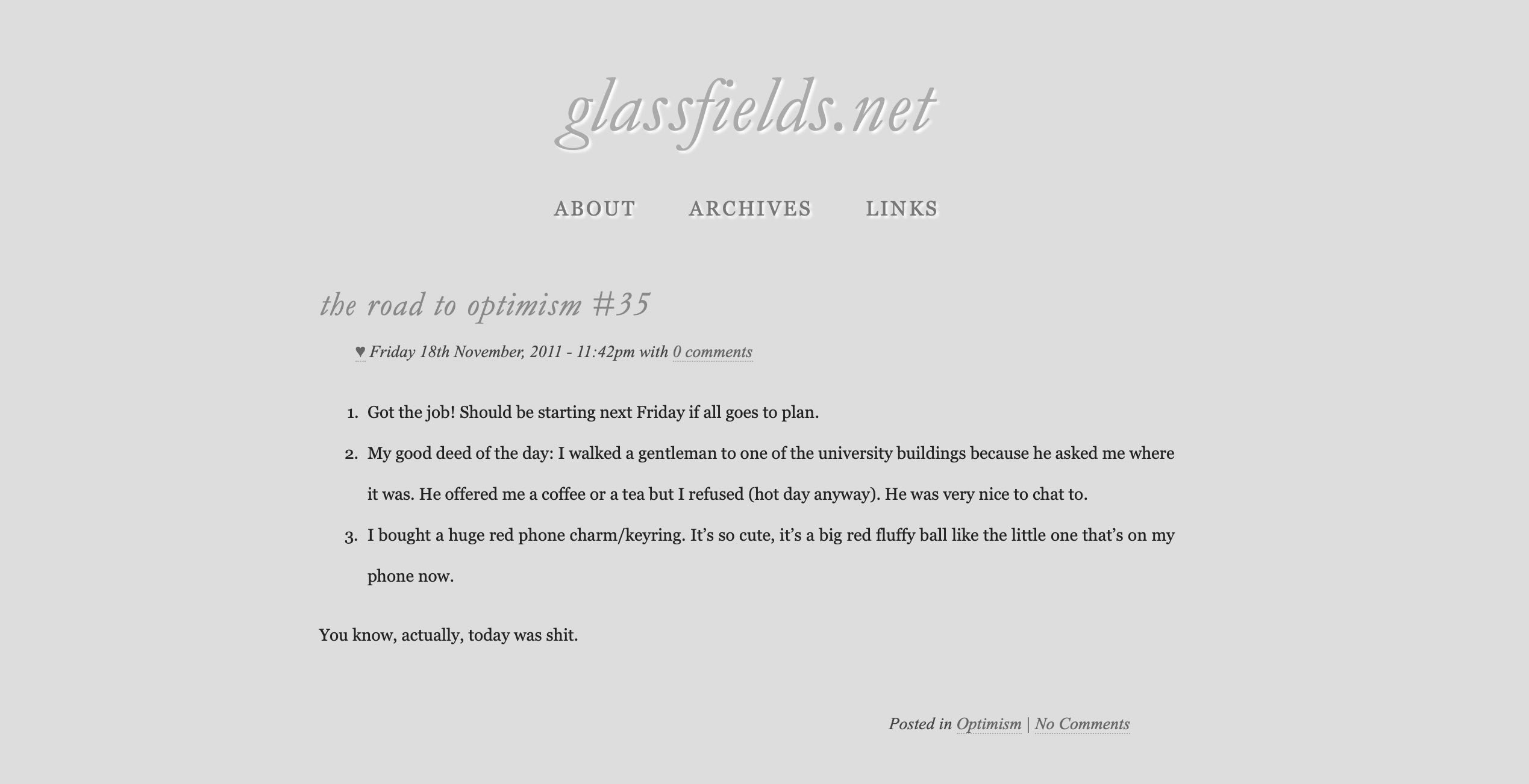
Whether social media has played a part in this change is another topic entirely—Facebook and Twitter didn’t really exist until around 2006, and weren’t yet around for long enough to provide much of a purpose beyond a profile page and a few rudimentary posts. Just a few years prior, we were mucking around on Bebo and MySpace—again with somewhat limited ways of sharing one’s life. Around the same time, there were many people flocking to what felt like an “indie” blogging tool in Tumblr, which made it easy for most people to create a blog and post a bunch of words or various kinds of media. However, for the folks like me, who had learned to code on Neopets or were tinkering with customising their Geocities or Freewebs pages, some of us remained loyal to LiveJournal, but some of us eventually created our own blogs on our own domains or—bless us—“hosted” on a complete stranger’s domain under a subdomain, because we couldn’t afford to pay for our own domain and hosting (or couldn’t beg our parents because they didn’t “get it”). There was a strange judgment associated with free websites, and they got a bit of a bad rap because the quality of many free sites at the time was poor, as so many of us kids were still learning how to design and code. The cool kids got “hosted”.
With hosting, it didn’t matter that we had no idea about the domain’s owner; it mattered that they were offering their web space to other people, and you could be one of those people. It was also a rite of passage to move from a free hosting site to one where someone invited you or accepted you. This seems like a strange prospect for anyone outside of this niche, but I think that in our circles it was seen as a way of connecting and making friends. Whether you had a subdomain and were hosted by someone, or you had your own domain, there was a period of time where it was common to write about your life in great detail—family, pets, friends, school, and all the drama associated with it—on your own space on the internet. And that was what we called blogging.

It is the cadence of posting to a personal blog in the mid to late 2000s that got me thinking about why it feels so difficult to write a blog post today. (Put aside all arguments about technology affecting our brains and warping our attention spans; I can’t afford that many tangents in this post.) It also conjures up the following anecdote that continues to have me in side-splitting laughter. In around 2005–2006 I was enjoying blogging so much that I was writing small, 500-word posts every second day. At the time, for me it was like writing in a diary, but online. I was dedicated to this consistency and this need to update my online friends on my life, that one day when I got grounded by my parents, I snuck online at 6:00am to write a blog post before I tucked myself back into bed by 7:00am to pretend I had been asleep the whole time. At a family gathering, I used my family friend’s computer at their place to post an update to my blog and explain that I was grounded. My mum was none the wiser, but my mum also didn’t know that if four days had passed since my last blog post, I was convinced that my friends and other regular readers of my blog may as well have thought I was dead. It’s melodramatic, but back then, it felt like it mattered that much.
Something makes me yearn for the feelings of that time, even though I don’t necessarily miss or want to re-live it. It is the way that it changed in 2013 because—god forbid—I was an adult doing a masters degree in university and I had to study or do assignments and had very little time to blog. It is the way that despite how hard we try, we make a goal to blog at a regular cadence in 2024 but it makes us seem like a content creator whose job it is to post every Tuesday at 4:00pm local time, and—try as we might—we fucking fail. Cast your mind to when I referred to “cool kids” being hosted earlier. Cool kids. We were kids back then. We went to school, where our hobbies weren’t always completely on the computer, and then we grew up and lived adolescent-to-young-adult lives. Then we got older and became adults with responsibilities; adults with full-time jobs; adults with other hobbies; adults who prioritised being social with their friends and family; adults with families with young children; adults whose lives just didn’t involve blogging anymore, or at least not to a great extent. We simply don’t have the time or energy. It is absolutely no wonder that I could blog every few days in my blog’s heyday.
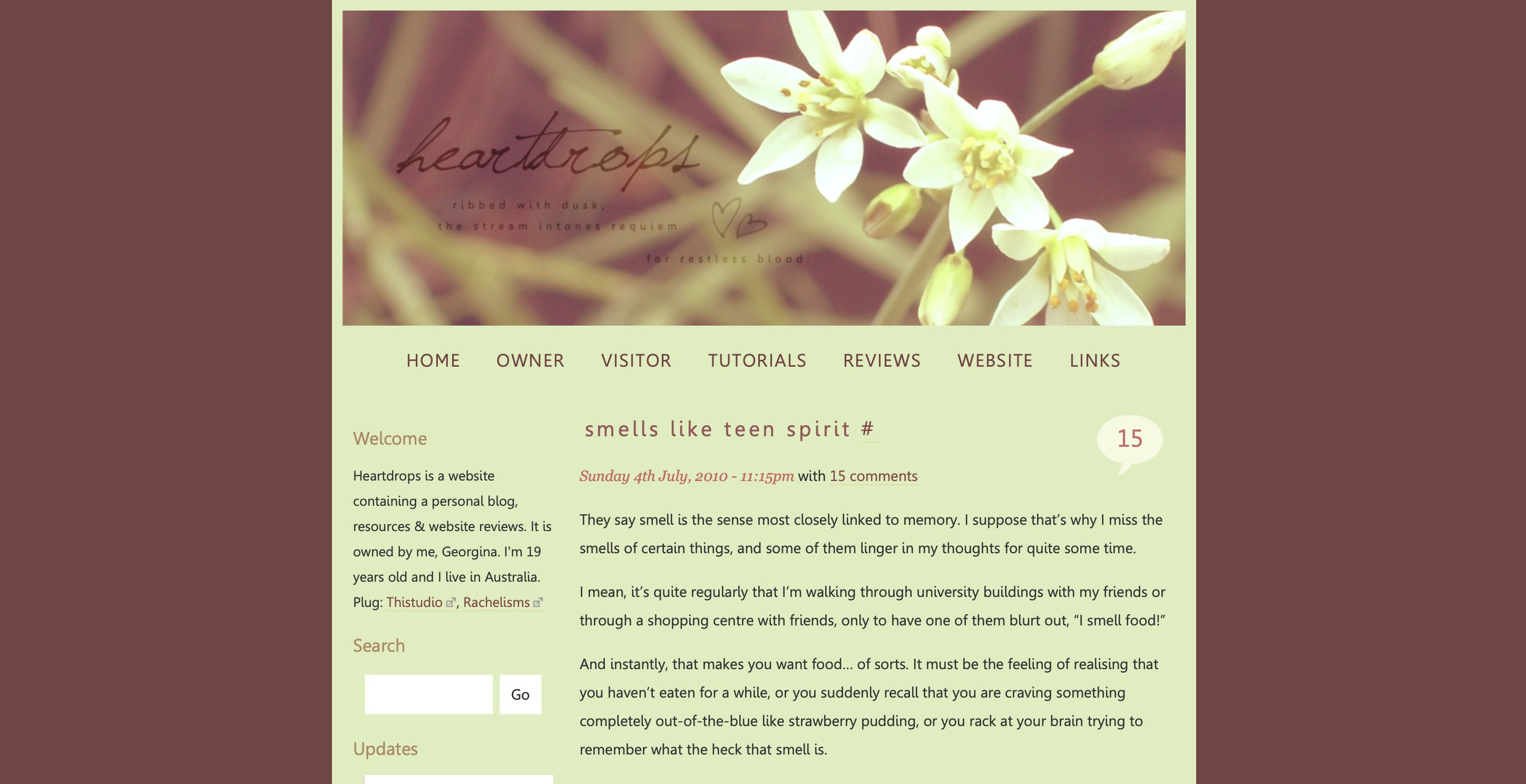
I say heyday because it’s true that in around 2009 I was getting around 80 comments on my blog posts. Sure, some of them were facilitated by replies and discussion, but it still counts as—excuse me while I barf in my mouth—engagement. Part of me wants to sit here and wail at how anyone who was too young to know of that time or was simply not in those blogging communities will never understand just how different it was, but being an elder millennial on the internet is tiresome enough, so I zip my mouth. I remember trying so hard to blog at least once every five days, but by 2011 I was running out of steam and so too were my blogging friends. Many of my friends were younger than me and finishing up school, so it shocked most people that I had the time to do an undergraduate degree while maintaining a blog and writing website reviews (I’m going to throw in an exasperated “lol” here, just for you people who remember what a drama that all was) and responding to people’s comments and reading other people’s blogs. And that’s what some people may never quite understand in this world filled with micro-influencers and “TikTok stars”—once upon a time, we made every effort to reply to every comment we received, and maybe even shamed those who didn’t return them. These days, you cross your fingers and hope the author puts a heart on your comment. Not gonna lie, I literally did it today when one of my Instagram notifications informed me that The Wombats had liked one of my comments on their posts. They’re a famous band, I know, but still.
I felt like the duty of updating a blog and returning comments encompassed my entire life. “How do you find the time?” And while I managed to bend over backwards to find said time, so many of my friends could not. They made the decision to put blogging on the back burner. It was around this time that personal blogs became less updated and more inactive by the day, as blogs filled with spam comments, self-hosted FanUpdate or Cutenews blogging systems got hacked, and some domains expired and gross advertisements and popups took over. As this happened, I lost some of my close online friends, because blogging was our only way of keeping in touch and many of us had not yet picked up social media, or refused to out of stubbornness, because we were completely dedicated to our online personal spaces that we had built with our bare hands. I remember a handful of my friends from that time, by name, often recalling the youthful, pretty, or rebellious domain or website names they had at the time. It is a strange thing to feel like you have lost a community of friends, not to any type of bizarre online exodus, but to what we all are reminded to appreciate in this highly digital, very online era: life.
Amidst the nostalgic TikToks and Instagram Reels riddled with references to MSN Messenger and AOL, and their comments made by people reminiscing over the time they got dumped on MSN, or “over it” ex-Tumblr users almost ashamed to admit they used the platform—I’ve yet to find my people. I’ve experienced this dozens of times before in social media comment sections, where I’ve virtually high-fived someone for sharing an “I thought I was the only one” experience, but I simply haven’t had the same with references to the “golden era” of blogging. Maybe one day I will come across other people, who lead vastly different lives to me, whom I have never spoken to before, who remember the tools, services, and networks that helped us make friends with each other? I keep in touch with a handful of my old blogging buddies through Instagram, though the space feels more distant. I think we will always remember, at the very least, that we met online years ago, well before social media existed, and when meeting people online was so damn taboo.
I feel like I am only just scratching the surface of what used to be. I also feel like I am sharing something about a mere slice of the internet, that as my friend Pauline said, you’d only understand if you were there. It’s an overused phrase, but it’s true. Several of us live the life of being attached to our blogs we’ve had for almost decades, continuing to advocate for personal blogging, yearning for the “good old days”—while seething through our teeth at the thousands of niche influencers producing content at our disposal. But maybe in our determination to share what an online life looked like before, we find ourselves in a very different world, but in exactly the same place we were before: doing the less common, lesser-known-about, less trendy, less ubiquitous, more misunderstood thing. And maybe—just maybe—it’s actually better that way.